So someone (on Facebook, of course) posted that glorious Trampier wight from the 1st Edition AD&D Monster Manual. It was an invitation to talk about level drain; an irresistable bait when fishing for grognards and youngsters alike. The former largely came down in enthusiastic favor, citing an atmosphere of dread some modern games lack. The latter were split, but mostly found the whole idea mean-spirited at best. But this week's offering isn't about level drain so much as an injunction against fighting everything you meet...
You need only hear the chatter around 5th edition to sense that modern characters are sturdier, with more powers sooner and greater access to healing. I can't say if they're more independently able; but they're clearly built to survive their first encounters better, with an implicit (if not explicit) expectation of thrilling cinematic combats where everyone shows off their awesome builds and gets to shine. Monsters are experience points on the hoof, an invitation to throw down in exciting mental movies featuring the characters.
There's nothing wrong with this. But I had to explain to them that old-school saw things differently. Not everything was there to be fought. Play was less a movie with grand battles the characters needn't refuse and more a strategically patient process. The goal was to secure as much treasure as possible at minimal risk. You don't engage wights in melee; are you freakin' insane? Or poisonous spiders. Or whatever. Bargain, steal, and save the big guns, and your hit points, for when the payoff justifies the use of scarce resources...
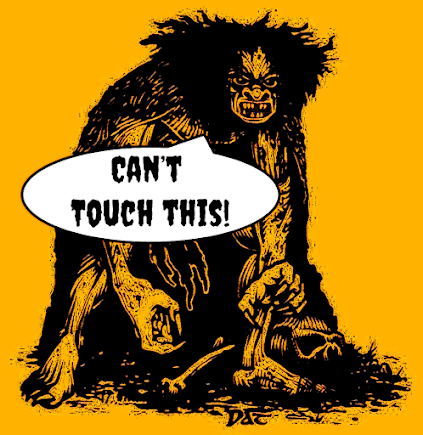
Because everything was a resource, and characters were squishy. Hit points, spells, potions and scrolls. And the lives of your henchmen, enlisted to swell the party's small numbers against hostilities. The charismatic handled tricky negotiations while the dwarves and elves translated to avoid a lopsided battle. Clerics turned the undead, magic-users cleared the room, and thieves stole precious gems without alerting their guardians. Physical combat was reserved for when the party could secure the upper hand and get the spoils.
To be clear, today's sessions have this too. But when the modern consensus finds level draining too harsh, it speaks to a different approach altogether. I mean, why play the original game of heroic fantasy if you can't be a heroic badass? And you can't be heroic if some undead travesty can erase many sessions of hard-won advancement with a single sorry roll of the dice. Buried deep within is the assumption that wights should be engaged in melee, and that the encounter shouldn't bear an unacceptable risk in the name of fairness.
Again, not a problem. It's a big hobby. And it shouldn't be lost on anyone that our games likewise eschew level draining mechanics. Lots of games do. But this old-school approach saw gameplay as a cautious, patient expedition into the dark punctuated by moments of action much like the real-world wars that inspired our fantastical play. Why wouldn't enemies be dangerous, high-stakes foes? And why wouldn't the undead, of all things, be so horrific that players, facing only imaginary wounds, pretend death, rightly feared them?
Old-school wasn't dumb. Or mean-spirited. Its characters were heroic for their relative normalcy. Its enemies dangerous. The prospect of physical combat was never to be taken lightly, for death was often one unlucky roll away. And how did characters survive when endowed with an unimpressive 4 hit points? They avoided anything approaching a fair fight, safe in the knowledge that treasure was worth more than any monster. No superheroes occupied its world, just normals possessing courage, strategy, and clever restraint...


