Being in the Main the Mouth of Olde House Rules

Tuesday, July 19, 2022

Game Review: Have Axe, Will Travel...

It should come as no surprise that Robyn and I love minimalist gaming. So when we chance upon a good example, we can't resist the opportunity to toot its horn and pitch the style to anyone within earshot of our megaphone. Turns out a good example of the Free Kriegsspiel is Have Axe, Will Travel, the latest from James Hook (Talon Waite to some) and Exalted Funeral. It's an inspired little system; and in addition to saying why, it's a perfect opportunity to evangelize and make the case why this might be the system to start with: 

Physical production is nice, straddling the line between primitive roughness and elegant presentation. With artwork by Inked Gas and some excellent font choices (I'm in love with the body font and grainy watermark), you really get an amateur, old-school atmosphere, which speaks to the core of its identity and aspirations. There's old-school, and then there's a deep time of the hobby; an Arnesonian time when games were minimalist affairs dependent on robust social contracts and a freeform narrative born of pulp goodness...

And HAWT lives up to its aspirations. Some rules are almost bullet papers, others denser treatments brimming with more than enough. HAWT wisely steers a middle course, offering up meaty details with a clever eye towards just enough to explain things adequately while providing room for the reader's imagination to blossom. You're almost immediately thinking of what you can do with these rules; essential, but often overlooked as a yardstick.

Character creation is an elegant, 7-point process, chief among them traits. Who (and/or what) is your character? From nimble elf to magical tree person, this is negotiated between the referee, who builds their setting, and the participants. All too often, I've seen novice players come with great ideas, only to get shot down (and possibly discouraged) by the rules. This is Free Kriegsspiel in it's purest form, friendly to creatives; and anyone who appreciate the approach will find a masterful expression of the concept at their fingertips...
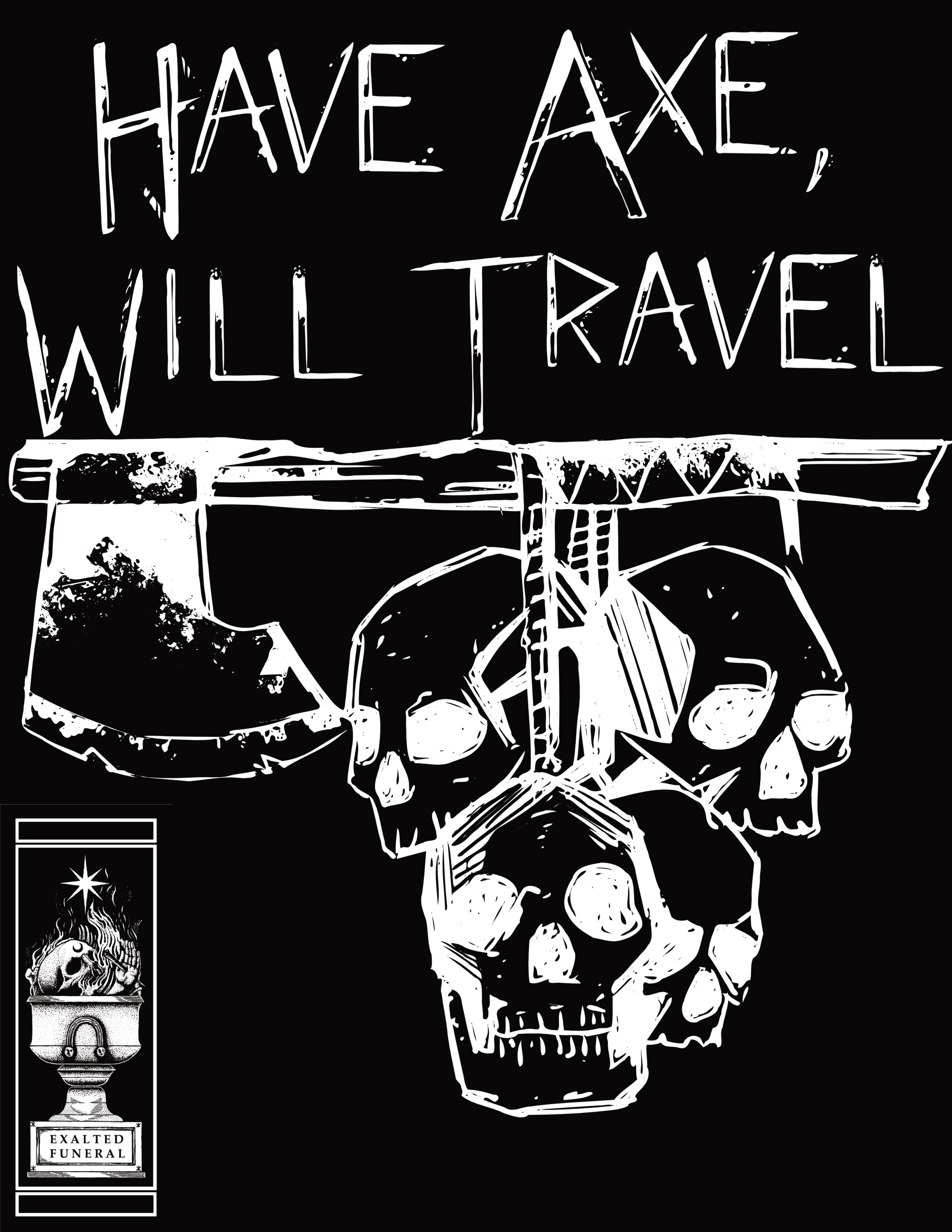

Traits include a profession; again, negotiated, along with languages and cosmic bondage, alignment in the game's unique parlance. How long should it take to say you want to play an elven archer? Or to work out that you come from the Blue Forest? Free Kriegsspiel says people are in the best position to decide - but so does HAWT. Readers are also treated to one of the best explanations of Law, Chaos, and Neutrality I've read anywhere, bounded by wonderful artwork that screams OD&D rendered by abler hands for added flavor.

Oh, and you get one extraordinary ability useable once a day, whether a magical pet who intervenes at critical moments or whatever, barring the godlike and game breaking (and again; who better than the players to say what that looks like). It's great stuff, and very much in the spirit of Arneson. You're playing to have fun, not to struggle through daunting rules seeking the perfect mechanical build. Imagine if literary characters were made that way; no, give me Conan and Frodo - or doom-haunted Elric with his sea of troubles.  

And there's money, a starter kits of sorts, and equipment tables. Every effort is made to balance breadth and depth on the side of freeform gameplay, which seems instantly easier just following the book's guidance. Those seeking tedious explanations of the system's monsters are missing the point of Free Kriegsspiel. The referee gets to build on their vision, which assures engagement for those who never tire of flexing their own imaginations in service to a fun shared experience. HAWT caters to this creative audience... 

And what of Gameplay? If you can do something (common sense and traits) roll 2d6, with a result on 5 or 6 on either die meaning success. Acting at an advantage, whether skills or circumstance, roll additional dice; when acting at a disadvantage, roll less. It's a simple and organic system that works well in practice. There's no adding or needless calculation, just eyeballing results, which Robyn and I liked a lot when we tried it. And there's Might, serving as hit points and a resource to expend gaining advantage or casting spells...

In this sort of game, choices are everything; and rather than just roll for success or failure, players tell their tale with resources that steer their fate. It's not story gaming; but something in line with what Arneson had in mind. But Might can also be spent casting powerful spells; provided - but with room to grow - limited only by the participant's imagination. This involves imprisoning spirits in runic objects, channeling the sorcery of historical imagination more than the impersonal science of D&D. I find it a nice departure from Vancian stuff for sure.

Characters advance. They fight monsters, win treasure, and get better. This content is provided, showcasing its simplicity (monsters get three easy stats). And there's the expected other stuff; overland travel, structural damage, the works. Its offerings are amply robust, complete and quickly extracted from the text for easy reference, which harkens back to what a rulebook should provide when not dabbling in heady fare. And even if you don't plan on tackling the rules as written, there's a body of useful - and universal - material.

Gaming is rules; but it's also technique. And philosophy. To this end, and to tie it all together, HAWT includes advice galore, both from it's author and contributors from across gaming community. Full disclosure: I'm one of them. Scott Malthous, Wizard Lizard, and Phantasm 72 add their voices, along with Tad Vezner, a seasoned veteran of the first dungeon adventure regaling the reader with invaluable experience (this one's almost worth the price of admission in my humble opinion). The author knows the genre - and recognizes a kindred spirit...   

Oh, and there's a sample adventure in homage to Arneson and a character sheet that nails the freeform spirit of the game. All told, it's a solid minimalist package, and one that ultimately succeeds as a toolkit around which clever referees can build their own universes.

VERDICT: Have Axe, Will Travel is a minimalist Free Kriegsspiel game that thoroughly understands - and respects - the genre and presents it well. Some hobbyists are intimidated by this approach, finding it untethered. HAWT shows that it can possess a solid structure while invoking the creative instincts of its participants, making it a great choice for seasoned minimalists and enthusiastic newcomers ready to flex their imaginations. If this sounds like your cup of tea, Have Axe, Will Travel is a worthwhile addition to your shelf and table...     

Tuesday, July 5, 2022

Story Gaming the Old School?

Tabletop roleplaying's traditional form involves a sharp division of labor. Conan, for all his might, had little control over the enemies he fought, only his own choices and those things he could change through personal effort. But there's another tradition: storygaming, perhaps without a formal gamemaster, where everyone collaborates on all elements of an adventure - and all without the classic authoritarian bent. Not my cup of tea: but I'm a live-and-let live person who gets how our hobby's origin might also have been collaborative. 

So early D&D was a freestyle affair, emphasizing rulings over rules (as befit the game; nothing's absolute, least of all our hobby) and leaning heavily into the social contract. Even so, there was a clear division of labor as vital as any rule. The Dungeon Master built the setting and became any and everything not a player character, whether innkeeper or lurking cutpurse. This lent a sense of realism because, much like our world, influence was hard-earned and greatly limited. No collaborative, lets-make-a-story-together stuff here...

Or was there? Because in OD&D's Monsters & Treasure booklet, Gary offered this piece of advice for "unlisted" monsters. Read to the bottom of page 20 for this gem: 

LARGE ANIMALS OR INSECTS: If the referee is not personally familiar with the various monsters included in this category the participants of the campaign can be polled to decide all characteristics [End quote; and this included Martian beasts from Burroughs].

That's right, Gary suggested that certain campaign elements might be subject to collaborative debate among the players; and while this doesn't rise to story gaming as we know it today (and certainly not the stuff The RPG Pundit so reviles), it nonetheless suggested that players could have a hand in establishing elements their characters would never reasonably have any control over. I mean, when I was in Iraq we really wished we could magically dictate the capabilities of the enemy to our favor, but such influence was beyond us all...

I make no claims beyond Gary's words. I wasn't part of the early sessions and can't speak to the extent this sort of thing happened (although it's not a stretch to imagine enthusiastic amateurs borrowing each other's ideas while creating this new hobby off the cuff). But what it really means is that while the so-called classic playstyle was cemented early on, there was nonetheless this transitional time when it hadn't happened yet. A time where D&D's true purpose (and ultimate source of fun), lay in people interacting with each other first.

Tuesday, June 21, 2022

Loving the Dungeon Bummers...

Something I love about old-school gaming is how character centric everything is. Dungeons exist because the players need someplace cool to explore; and monsters, especially of a certain variety, were made exclusively to challenge the party. We can retroactively provide an ecological justification; but really, these monsters (original creations and not derived from mythology) exist solely because characters exist. I call them dungeon bummers, and these made-up baddies remain close to my heart, especially the following creatures:   

Gelatinous cubes are virtually invisible and fill a corridor; i.e., the very open space in a dungeon becomes dangerous and requires special care to safely navigate.

Lurkers above drop on the unwary, punishing those who fail to look in all directions.


Mimics make virtually any stone or wooden object potentially dangerous, almost as much as all the mimic memes on Facebook. This is the mother of dungeon bummers...

Ochre jellies slip through cracks in the walls, meaning danger lurks in the ordinary crevices abundant underground. They only exist to endanger the unwary adventuring party.

Piercers are the spawn of an asshole god. Now all those stalactites are potential monsters, ensuring paranoia and yet another excuse to prod stuff with your 10-foot pole.

Now I get that any monster presents challenges to a party, however realistic. Bears are terrifying adversaries; and we get those in New Jersey. But monsters specifically created to exploit some common occurrence are a whole other ballgame. These character-centric encounters only exist because the characters exist and interact with the campaign setting, a delightful love letter to the players. It says the game exists for them; dungeons were made with them in mind; and a good DM labors with love to challenge and amaze them...    

Tuesday, June 7, 2022

I Was an 80s Gaming/Metal Nerd...

Around 1982, I discovered that everything I liked was Satanic. Dungeons and Dragons, obviously (hence the blog), but also metal music (to be clear, its better specimens and not the questionable hair-metal variety). You'd think I was holding a daily black mass to hear the hysterical rumblings from certain quarters. Youth was under assault; Satan was pulling dark strings using every tool in his arsenal - music and, apparently, imagination... 

I'm sure some of those who never came to their senses would be horrified at my secular humanism; but this isn't a religious thing. Some of the best and brightest hobbyists, people I like and respect immensely, were - and remain - people of faith. And I saw firsthand how moral panics, unmoored from reality or evidence, hurt these early gamers as well-meaning parents locked away their rulebooks, convinced they were saving souls.

Demons, magic; things prohibited by the Good Book featured prominently. And just like rock and roll and cars (yes, cars), gaming took kids to places adults couldn't follow (barring the superior sort who took the time to ask or actually participate). I suffered articles in supposedly respectable media claiming things objectively - and demonstrably - false, which made me appreciate the value of evidence while showing that my elders could still be wrong.

It was a volatile mix. We were young and newly rebellious; and here's this sweet new thing that allowed us to experience another world - and to be another self. It wasn't about rebellion, per se (our Chess Club was dubbed The Mild Bunch); but it became a subversive act once everyone began freaking out. More than anything we'd seen, gaming was awesome because fantasy was awesome. Dragons and wizards and magic swords are awesome...

And then one day your buddy plays some Dio - or Ozzy, or whatever, and it speaks to that fantasy loving part of you. The driving guitars marched us into battle even as the solos taught us that a person could do more than play chords behind a singer. And its lyrics, running the gauntlet from horror to magic to samurai warriors, was the wizard painted on the side of your neighbor's van. With matching imagery, heavy metal was gaming music made flesh.

And you saw this speciation; the drama nerds, obviously, but also some pure metalheads (think Eddie from Stranger Things) who may not have even graduated but loved fantasy, because it's awesome, and saw their aspirations in dice and dragons. This didn't help polish gaming's image to a hysterical public - be we understood. And the cross pollination won metal some unlikely devotees - and elevated a genre to the status of nerd rock.

I steered a middle course. My friends called me a Mingler because I moved through many circles (steadfastly avoiding certain ones), including the metalheads. In my experience, roleplaying showcased their criminally overlooked talent and intelligence, and this went both ways. Metal friends made us more worldly and open to experiences beyond our relatively sheltered existence. The benefits to both factions was definitely not a stranger thing...